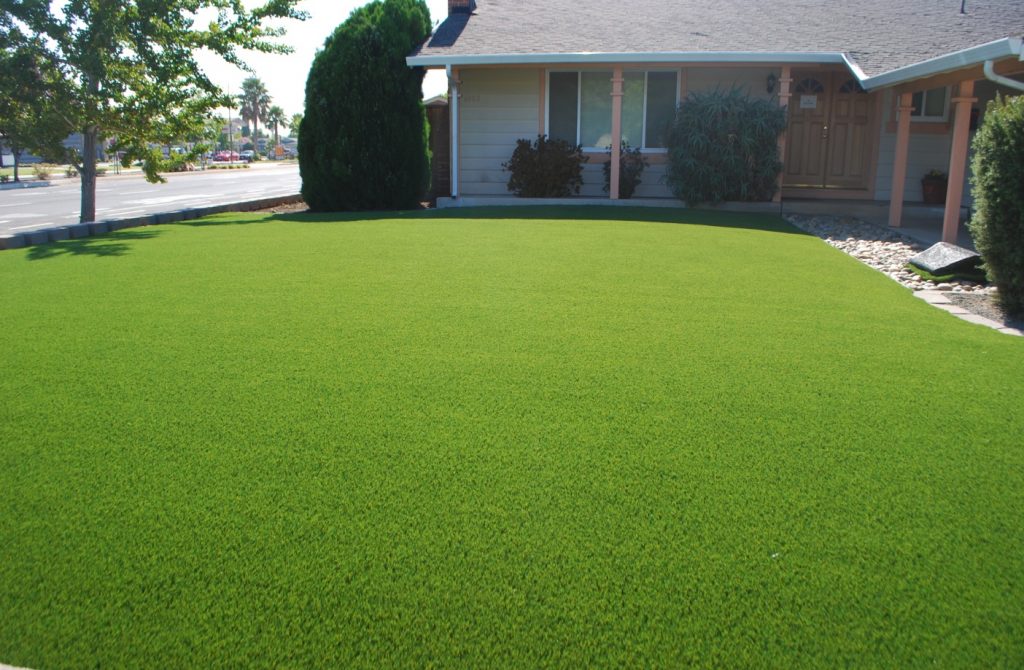

Artificial Turf vs. Natural Grass: The Short Answer
Artificial grass needs no mowing, fertilizing or irrigation to stay green, and it keeps mud, grass clippings and grass pollen out of your yard and your home. Natural grass usually costs less to put in and does not warm up as quickly in direct sun, but it is a living plant that needs regular watering, mowing and feeding. If low upkeep and a cleaner, mud-free yard matter most, artificial turf usually comes out ahead. If you want a living lawn and the most comfortable surface on hot afternoons, natural grass has the edge.
How They Compare
| Artificial turf | Natural grass | |
|---|---|---|
| Upkeep | Clear debris, rinse now and then and brush busy areas. No mowing, edging or fertilizing. | Mowing, edging, fertilizing, weeding and reseeding worn spots. |
| Water | No irrigation needed to stay green. An occasional rinse clears dust and keeps pet areas fresh. | Regular watering to stay green, more in hot, dry months. |
| Installation | The old lawn is removed, a base is graded and compacted, and the turf is laid, seamed and secured. It is ready to use once installed. | Seed or sod goes over prepared soil and needs time and frequent watering to establish. |
| Drainage | Water drains through the backing into the base. How well depends on the backing, the base and the installation. | Depends on the soil. Clay soil and low spots can stay soggy and muddy after rain. |
| Heat | Can warm up faster than natural grass in direct sun. Shade and a quick hose-down help. | Does not warm up as quickly in the sun, but can brown in heat and drought without enough water. |
| Look and use | Stays green and even all year and holds up to pets and play without bare patches. | A living lawn that can thin or wear in busy spots and where pets play. |
| Ongoing care | Pick up pet waste, rinse, top up infill when it gets thin and repair damage early. | Seasonal feeding, aeration and weed and pest control. |
Why Artificial Grass Can Keep Your House Cleaner
Dirt, mud and debris
With natural grass you deal with dust in dry weather and mud in wet weather. Grass clippings, holes dug by pets or rodents, dog-urine spots and bare patches from play are hard to avoid, and some of that dirt ends up inside on shoes and paws. Installing artificial pet turf for a dog run and a synthetic turf playground or playground safety surfacing gives pets and children a play area without muddy patches.
Grass pollen
Grass pollen is a common allergy trigger, and it can be carried indoors on clothes, children and pets. Artificial grass doesn’t produce pollen because it is synthetic. Pollen from nearby trees and plants can still settle on it, and a regular rinse clears it away.
Lawn chemicals
Natural lawns are often treated with fertilizers and pesticides, and small amounts can be tracked indoors on shoes and paws. Artificial grass needs no fertilizer or pesticide to stay green.
Things to Weigh Before You Switch
Artificial turf costs more to install than seed or sod, and how long it lasts depends on the product, the installation, how much it is used and how well it is maintained. It also needs some routine care: picking up pet waste, rinsing, brushing busy areas and topping up infill. Natural grass is cheaper to start and does not warm up as quickly in the sun, but the watering, mowing and seasonal care continue all year.
To get your free artificial grass estimate today, or if you have any questions about our service, contact the professionals at Superior Turf n Ivy. Our synthetic turf for lawns page explains how turf, base and drainage come together. A related guide covers signs it is time to replace your lawn.